










Social proof is the psychological phenomenon where people look to the actions and experiences of others to determine what's correct, trustworthy, or worth buying. In business, it simply means: when potential customers see that other people have trusted you and had a positive experience, they're far more likely to trust you too.
Think of it as modern-day word-of-mouth, but displayed on your website, social media, and anywhere prospects might find you. Instead of your neighbors literally talking over the fence, social proof is marketing using that conversation visually and persistently to fortify your webste health.
Why It Works
Human beings are wired to follow the herd in uncertain situations. When someone lands on your website, they don't yet know you. They're unsure whether you'll show up on time, do quality work, or charge fairly. That uncertainty creates friction. Social proof reduces that friction by saying, in effect: "Look, all these people already made this decision and they're happy. You're in good company."
Robert Cialdini, the psychologist who coined the term, identified social proof as one of the six key principles of persuasion. Digital data backs this up: 92% of consumers read online reviews before making a decision, and displaying testimonials can increase conversion rates on a website by over 30%.
Examples of Social Proof for a Contractor's Business
- - Customer Reviews & Ratings: Google reviews, Facebook recommendations, and industry-specific review sites. A 4.8-star average with 50+ reviews is instant trust-building.
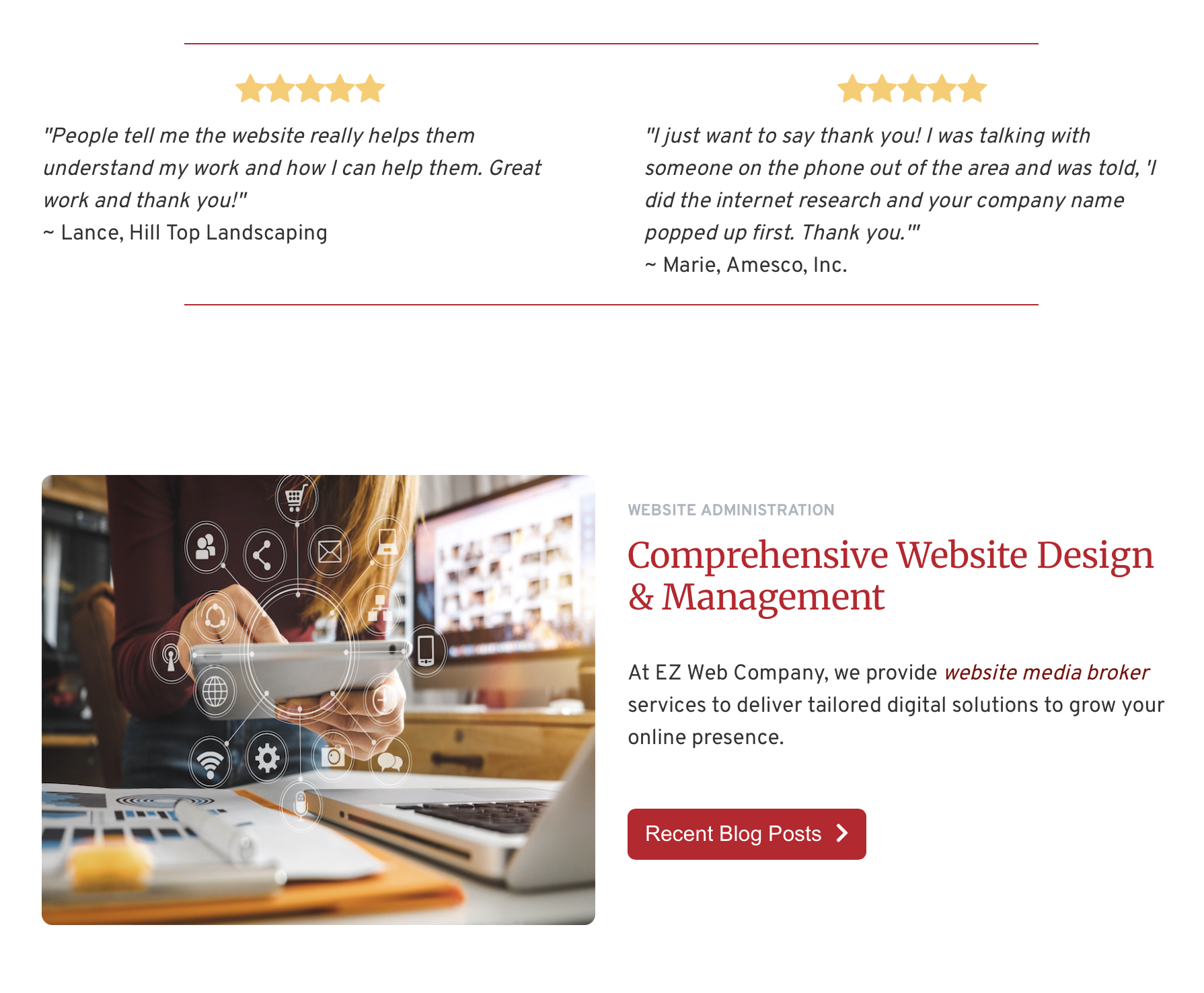
- Written Testimonials: Short, specific quotes from real clients. The most powerful ones name the project type and a concrete result: "Steu, I don't kknow what you are doing but it keep it going. My phone is ringing off the hook. ~ Terry Buntin, Buntin Construction"
- Project Photo Galleries: Before-and-after images that show actual work. This is visual proof that you deliver the quality you claim.
- Video Testimonials: A 60-second phone video of a happy homeowner standing in their new kitchen has more impact than a page of text.
- Case Studies: A brief story of a client's problem, your solution, and the outcome. This shows you can handle complex jobs.
- Trust Badges & Logos: Industry certifications (BBB, NARI, manufacturer partnerships), awards, and membership emblems. These signal that official organizations vouch for you.
- Social Media Engagement: When a Facebook post about a finished job gets 40 comments saying "Looks great!" or "Can you do my house next?", that's public social proof.
- "As Seen On" Mentions: If you've been featured in a local news segment, a home show, or a popular blog, display those logos on your site.
Where to Put It on Your Website
The key is spreading social proof throughout the site, not burying it on one hidden "Testimonials" page.
-
1) On your homepage hero, show a star rating and a one-line testimonial.:
2) On service pages, include a mini-gallery of that specific type of project with a client quote.
3) Near every contact form or CTA, place a short testimonial that relates to that action: "Steu, Thanks, and Thanks! I’m getting calls from the web site. Got three calls, and turned one into a job! Awesome work! ~ Paul Benson, Blue Painting Painting"
4) In the footer, display industry badges and certifications.
Social proof isn't bragging. It's simply letting your satisfied customers speak for you, and that's the most convincing sales message you can have. Want some tips for sustaining your website health? Check our the Website Admin ToolKit.