












Current research demonstrates clear marketing benefits, including substantiating your online brand, when your business uses a domain email instead of a free email like gmail or hotmail. While Google's official stance is that using a domain email address isn't a direct ranking factor, a wealth of data shows a strong correlation with higher organic search performance. It boils down to the fundamentals of user trust, brand credibility, and professional perception.
The Rub: Direct vs. Indirect Impact
First, it's important to understand the official position: Google representatives, including John Mueller, who stated that the domain you use for your email is not a direct SEO ranking factor. Search engines prioritize website content, quality, and technical factors, and an email address doesn't function as a traditional backlink.
However, this is where the nuance comes in. The real power of a domain email address lies in its indirect impact on SEO
Gmail is making changes that will impact your email administration.
Building Brand Trust & Credibility
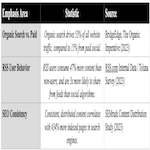
Consumer trust is the foundation of online business, and a domain-based email is one of its strongest signals. A survey by GoDaddy found that 75% of Americans view a domain-based email (e.g., you@yourcompany.com) as a critical factor in trusting an online small business.
Influencing User Behavior
This trust directly impacts user actions. When you use a free email service, 33% of consumers doubt your legitimacy, and nearly a quarter are hesitant to provide personal or credit card information. In fact, a professional email is considered three times more important as a trust indicator than an active social media presence. This lack of trust can lead to higher bounce rates and fewer conversions, which are negative user engagement signals that can directly degrade and thereby reduce your search rankings.
Evidence Directly Linking Email Practices to SEO Metrics
There is are measurable impacts to SEO that are connected to email practices.
-
Reduced Bounce Rate: A professional, trustworthy appearance keeps users on your site. One analysis found that websites using a domain email address saw an average bounce rate decrease of 12%. Bounce rate is a known user engagement signal for search engines.
-
Improved Local Search Ranking: For local businesses, consistency and trust are paramount. The same source indicates that simply having a domain email clearly placed on your contact page can correlate with a 7% increase in local search rankings.
- Consistency is Key: Use your branded domain for all customer-facing communications and local citations. In local SEO, where citations account for a significant portion of ranking factors, presenting a consistent professional image across the web is critical.
Research On Email Aliases
- Consistency is Key: Use your branded domain for all customer-facing communications and local citations. In local SEO, where citations account for a significant portion of ranking factors, presenting a consistent professional image across the web is critical.
Email servers are always upgrading processes to filter out spam and prevent phishing. The technology of sending and receiving mail will always be evolving in that direction. Below are the major drawbacks from using an alias on your domain email.
SPF/DKIM Authentication Breaks: In simple terms, the forwarding server’s IP isn't authorized by the sender's SPF record, causing SPF to fail. Forwarding also breaks DKIM, as any added content (like a signature) invalidates the cryptographic signature, making the message look tampered with to inbox providers.
Email Goes to Spam or Gets Blocked: When authentication fails, major providers aggressively filter mail. Yahoo and Google enforce strict DMARC policies which reject emails that fail checks. Simply put, forwarding turns your server into a "middleman" that looks like a fake sender impersonating the real one to Gmail.
Domain & IP Reputation Damage: Email reputation scores shift negatively over time, as forwarding can flag mail as spam,damaging standing and slowing mail delivery for your whole domain. Many providers view alias accounts with heightened suspicion as they're frequently used by malicious senders.
Reduced Inbox Placement & SEO Impact: Directly, low engagement tanking your domain reputation can cause more emails to land in spam. While not a direct ranking factor, the resulting poor deliverability and consumer hesitation signal poor quality to Google over time.
Using an alias can make messages look like spoofing attempts and damages overall sender scores, the fix is relatively simple: use a dedicated email hosting service with proper authentication (SPF, DKIM, DMARC) rather than forwarding.
Summary Of Data

Ultimately, while the domain email itself doesn't flip a ranking switch, it is a powerful and necessary signal of a legitimate, trustworthy business. In a competitive online landscape, the absence of one is often a stronger signal than its presence. It's a foundational element that supports all other SEO efforts by building the user trust that search engines aim to reward.